The Coles in the Galápagos Part 1: Mashpi Lodge and the cruise of a lifetime
Some trips are memorable for the places you visit; others stay with you because of the experiences, wildlife and people you encounter along the way. Our journey through Ecuador, the Galápagos Islands and Peru was certainly the latter. From walking beneath waterfalls in the cloud forest to snorkelling alongside penguins and sea lions, every destination brought something completely different.
The highlight was undoubtedly our expedition cruise around the Galápagos aboard National Geographic Endeavour II. It was an extraordinary opportunity to experience one of the world's most remarkable wildlife destinations, with every day bringing encounters that felt almost too special to be real.
Discovering mainland Ecuador
We began our adventure with a week on mainland Ecuador, which was a fantastic introduction to the country's landscapes and culture.
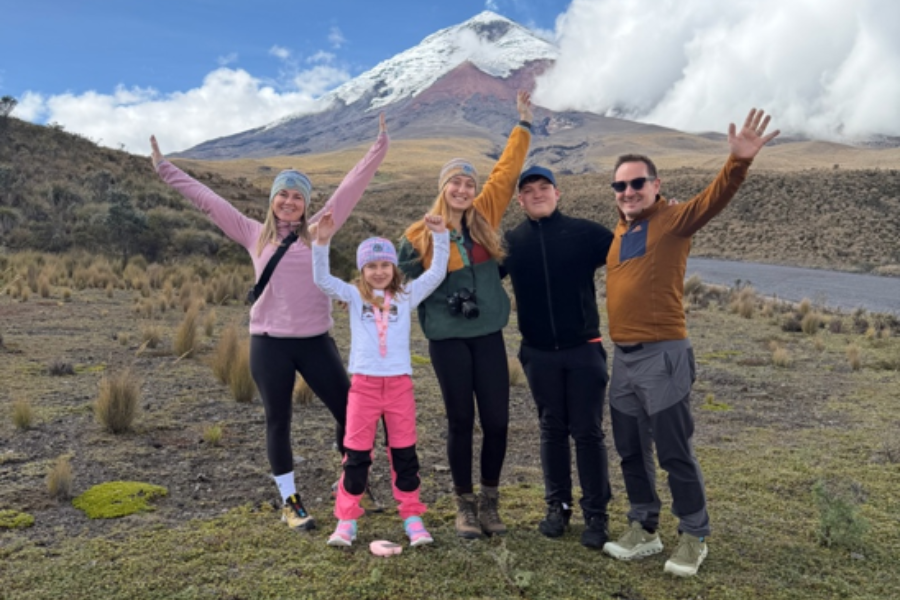
One of our first excursions took us to Cotopaxi National Park and Quilotoa, home to a spectacular volcanic crater lake. The scenery was incredible, and the day gave us a real taste of Ecuador beyond its famous wildlife destinations. We were able to experience some of the local culture along the way, making it a brilliant start to the trip.
Back in Quito, we enjoyed a cultural tour with a National Geographic guide. We explored colourful local markets and beautiful historic churches, learning more about the city's history and everyday life.
From Quito, we travelled to Mashpi Lodge, tucked away in the Chocó-Andean cloud forest. Surrounded by dense rainforest and incredible biodiversity, it felt wonderfully remote. It was the perfect place to slow down and immerse ourselves in nature before heading to the Galápagos.
Our first walk took us to the Life Centre and Butterfly Farm, where we learnt about the butterfly life cycle and spotted hummingbirds darting between the flowers. We were also lucky enough to see a tayra, an animal rather like a large weasel.
That evening, we joined a talk with one of the lodge's resident biologists, who explained some of the research taking place in the surrounding forest. It was fascinating to hear about the biodiversity of the area and the work being done to understand and protect it.
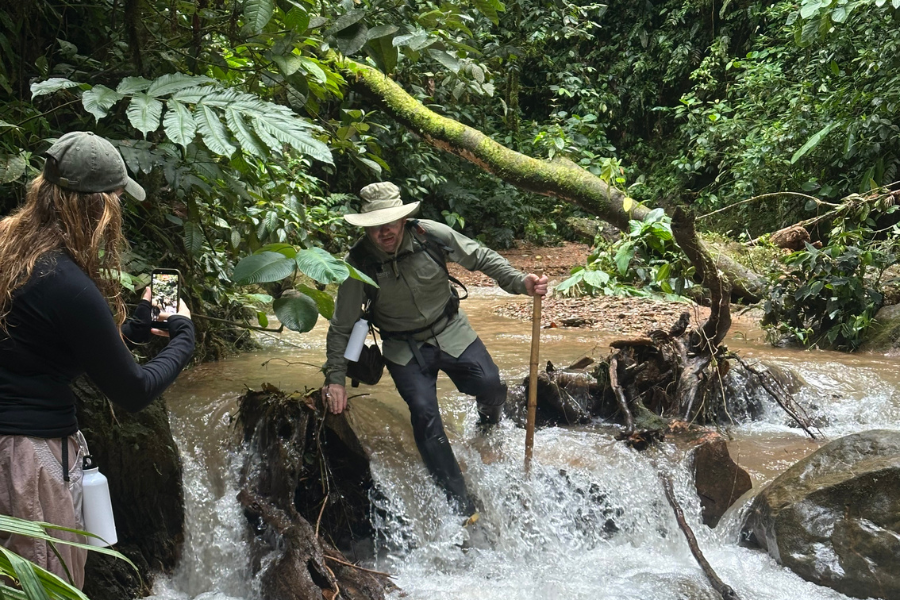
The following day, our guide Gabriel took us on an unforgettable walk through the forest to a waterfall. We spent around two hours walking down the river, sometimes wading through water above our knees, surrounded by an incredible variety of plants. The elephant-ear leaves were particularly impressive. At the waterfall, we even had the chance to paddle and walk underneath the powerful cascade.
We also experienced the forest from above. A cable car carried us high over the rainforest canopy, and at one point Gabriel asked us all to close our eyes before opening them again. Looking out across the endless green forest, with no signs of civilisation in sight, was a moment that really put the remoteness of Mashpi into perspective.
For something a little more adventurous, we tried the Sky Bike: a pedal-powered bicycle suspended on cables high above the forest floor. What started as a gentle ride quickly turned into a family race!
One of my favourite experiences was the night walk. Exploring the forest after dark revealed a completely different world. We spotted a huge stick insect, a shoelace snake and even the moult of a tarantula. At one point, we were asked to close our eyes and simply listen to the rainforest around us. It was a brilliant reminder of just how much activity is happening in the forest, even when we cannot see it.
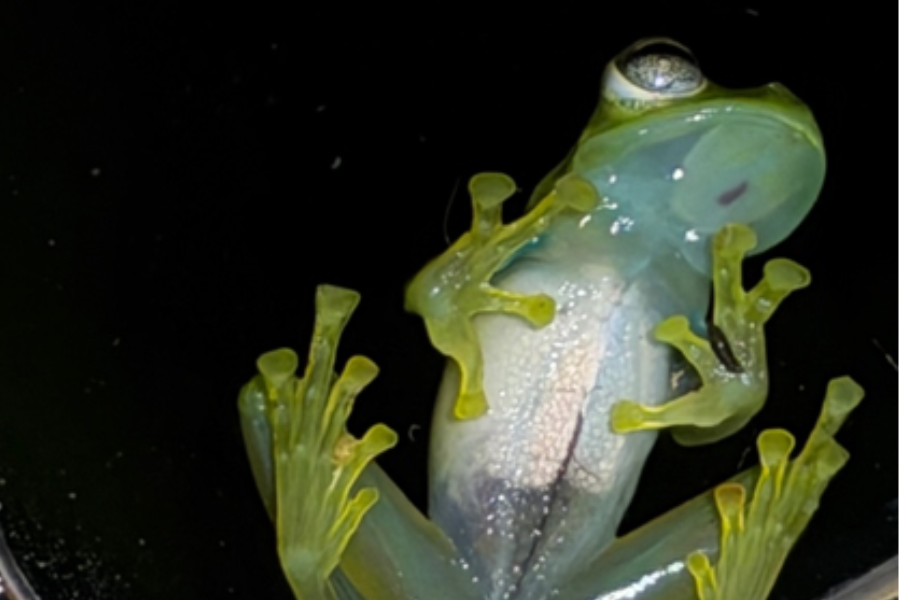
On our final morning, we visited the hummingbird sanctuary. There were so many hummingbirds flying around us, and my dad's bright orange phone seemed particularly attractive to them. They came incredibly close, even landing around him! On the journey back, Gabriel played some traditional Ecuadorian music, providing a lovely end to our time at Mashpi.
After one final night in Quito, it was time for the part of the trip we had been most excited about: the Galápagos Islands.
The Galápagos: A wildlife experience like no other
Arriving in San Cristóbal, we were immediately greeted by the wildlife that makes the Galápagos so special. Sally Lightfoot crabs covered the harbour rocks, while Galápagos sea lions lounged around the waterfront. It was an incredible introduction, and we had not even boarded the ship yet.
We joined National Geographic Endeavour II and began sailing around the islands. Almost immediately, greater frigatebirds started following the ship, gliding effortlessly alongside us. We even spotted a shark in the water. It was hard to believe that this was only the beginning.
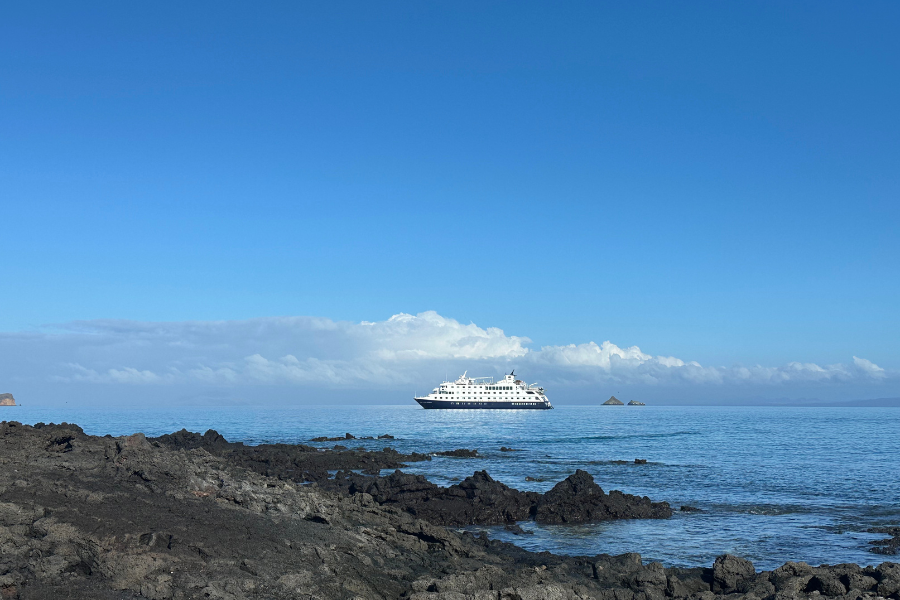
Española: Our first snorkel and unforgettable sea lion encounters
Our first island visit was Española, where we enjoyed our first snorkelling experience of the expedition. The underwater world was just as colourful as we had hoped, with bright parrotfish and plenty of other marine life.
On the beach, we came across the skeleton of a young humpback whale, a fascinating reminder of the wildlife that passes through these waters. But it was the sea lions that really stole the show. We had our first close encounters with them on the beach, including two very young pups who followed my little sister along the sand. At one point, we were all lying down on the beach watching them, which made for some brilliant photographs.
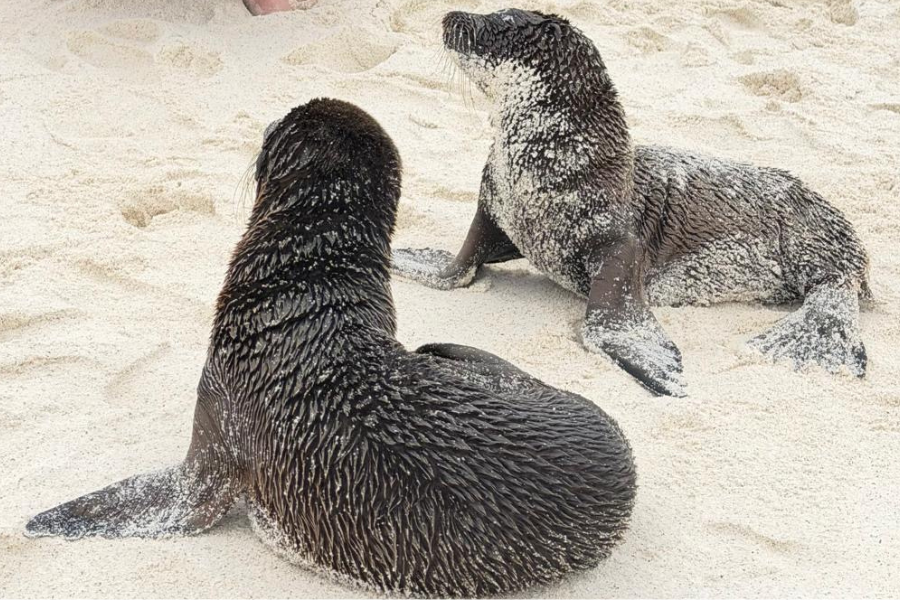
During our afternoon excursion, another group ahead of us had the extraordinary experience of witnessing a sea lion giving birth. Although we missed that particular moment, we had plenty to see ourselves. We spotted our first lava lizards, Nazca boobies and huge numbers of marine iguanas basking in the sun.
As we sailed away from Española that evening, watching the island disappear into the sunset was a pretty special way to end our first full day.
Floreana: Flamingos, sea turtles and the famous Post Office Bay
Our next stop was Floreana, an island with a fascinating mix of landscapes and history.
The island had two very different types of sand: dark volcanic and mineral-rich sand on one side, contrasting with lighter sand made up of organic material on the other. We also spotted flamingos and visited a beach used by sea turtles for nesting. The tracks in the sand showed where turtles had come ashore, and we could see where some had rested at the bottom of the beach.
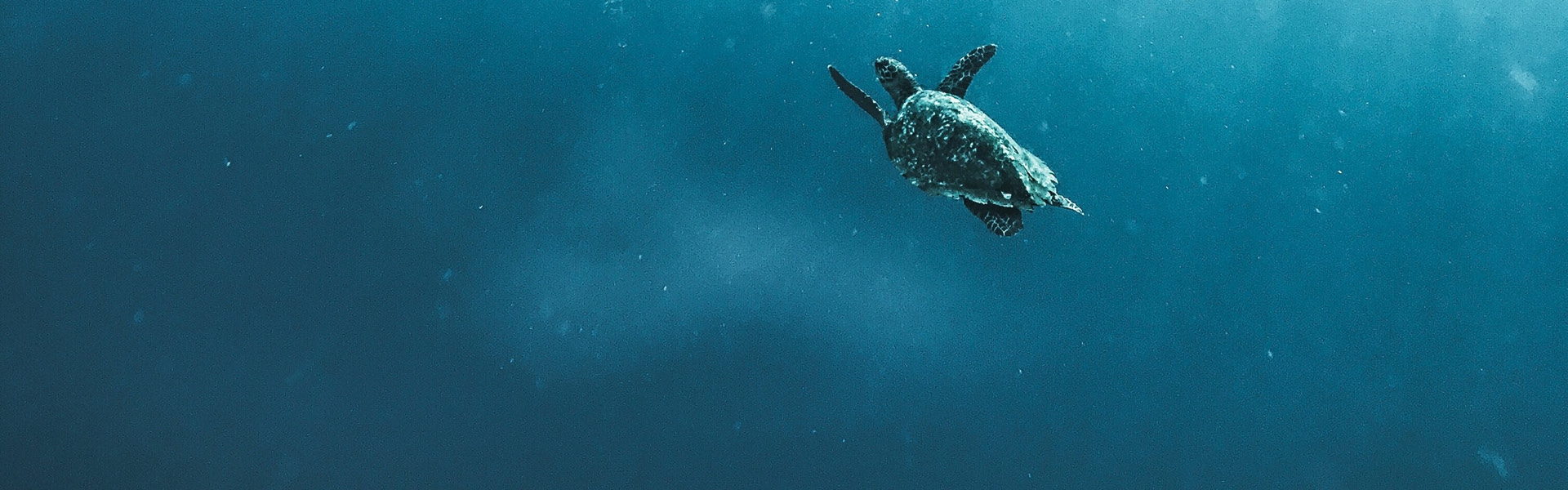
We then headed out kayaking, where we were lucky enough to see lots of sea turtles in the water. Some were even mating, giving us a brilliant opportunity to observe their behaviour in the wild.
A particularly memorable stop was Post Office Bay. The tradition dates back to the days of whalers and merchants, who would leave letters in a barrel for passing sailors to collect and deliver if they were travelling near the intended recipient. The system still exists today, and visitors can take part by leaving their own letters or taking ones addressed to somewhere they are able to deliver.
We spent some time looking through the letters and found a few addressed to places near home. We took them with us, hoping to hand-deliver them when we returned to the UK, and left a few of our own in the barrel. It was such a simple idea, but a lovely way to feel connected to travellers from around the world.
Santa Cruz: Giant tortoises and conservation
On Santa Cruz, we visited the Charles Darwin Research Station, where we learnt about the important conservation work being carried out to protect the islands' unique wildlife.
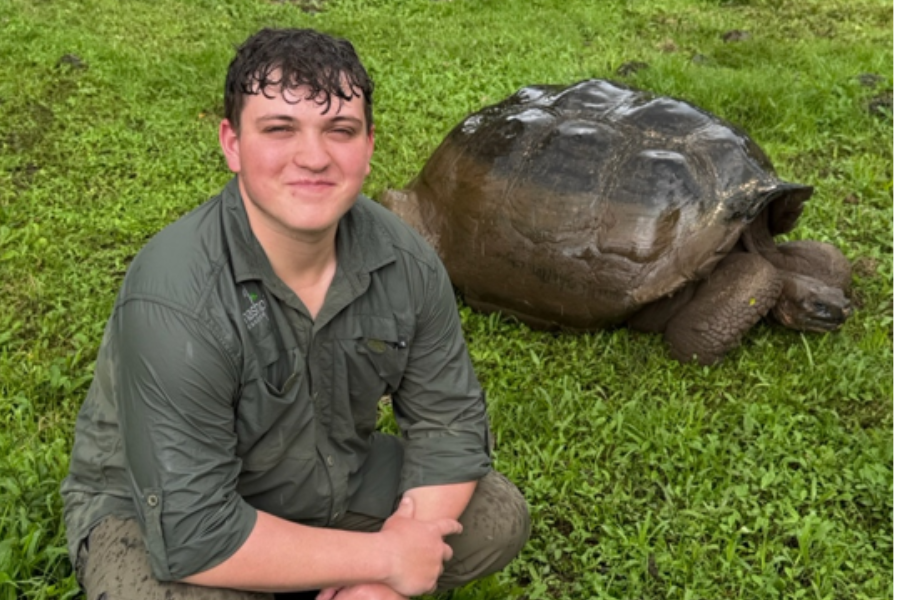
The giant tortoise breeding programme was particularly interesting. We saw tortoises at different stages of development and learnt more about the work involved in helping populations recover.
We also discovered how the islands' different environments have influenced the evolution of their plants. The cacti, for example, have developed different growth strategies depending on the grazing pressures from animals such as giant tortoises and land iguanas.
We had the chance to visit a local school and learn about Ecuadorian volleyball, known as ecuavóley. Of course, we had to get involved, and our family even managed to win! Later, we travelled into the highlands, where we were lucky enough to see giant tortoises roaming freely in the wild. Seeing these enormous animals in their natural habitat was very different from seeing them at the research station.
That evening, back on board, we enjoyed a performance from local musicians and dancers. It was a lovely opportunity to experience more of Ecuadorian culture while sailing between the islands.
Cerro Dragón: Land iguanas and blue-footed boobies
Another day on Santa Cruz took us to Cerro Dragón, where we encountered our first land iguanas. Their prehistoric appearance made them particularly fascinating to watch.
We also spotted flamingos and more sea lions. One interesting behaviour we noticed was the sea lions lifting a flipper out of the water, almost like a shark's dorsal fin. We learnt that this helps them cool down.
We spent more time exploring the coastline, walking through water up to our knees and taking in the landscape. A Zodiac ride gave us a different perspective of the island, and we spotted our first blue-footed boobies.
One of the highlights for the younger members of the family was the Junior Explorers programme. I was lucky enough to have the opportunity to drive the Zodiac myself, which was a brilliant experience!
A sheltered bay and some of the most incredible wildlife encounters
One of the days that will stay with me most was spent exploring a sheltered bay by Zodiac.
The wildlife we encountered was extraordinary. We saw an eagle, a Galápagos hawk, Galápagos penguins, blue-footed boobies, pelicans and eagle rays. There was so much happening around us that it was difficult to know where to look.
For me, this was probably the favourite experience of the entire trip. Being surrounded by so many different species, all going about their lives in their natural environment, was something really special.
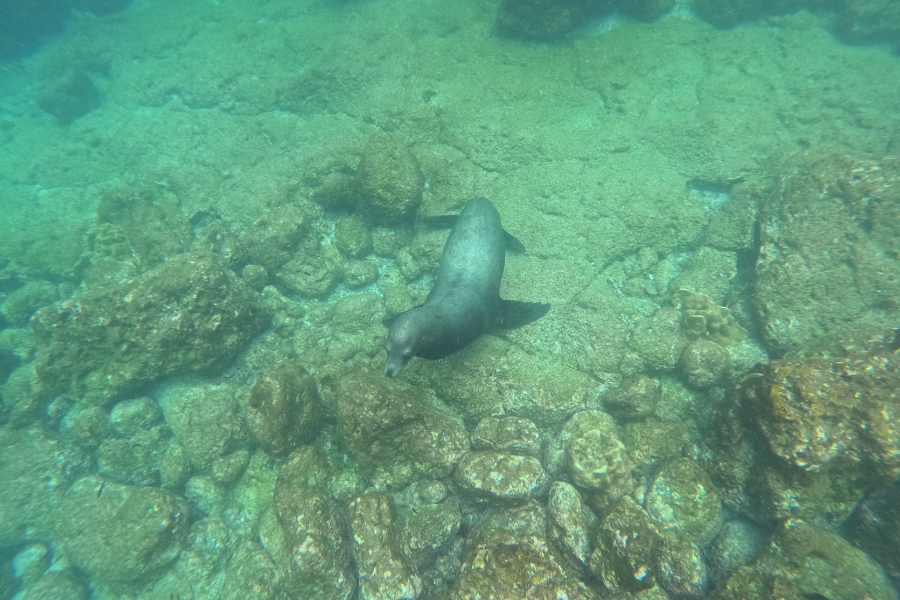
We also enjoyed three snorkelling sessions that day. Seeing penguins darting through the water beneath us was incredible. We spotted plenty of white-tip reef sharks too, which were much larger than I had expected to see while snorkelling!
That evening, we celebrated Halloween a day early on board and we enjoyed a fantastic Ecuadorian feast. It was a fun way to bring the expedition to a close. Find out more in part 2 where we visited Machu Picchu!